Showing posts with label characters. Show all posts

Monday, July 11, 2016

Well-trod Paths: Thoughts on rereading Shannara


I decided to re-read Terry Brooks' Shannara series recently and have been picking my way through Sword of Shannara. I read the original trilogy somewhere in my tweens back during the last millennium, and my memories of the books have stuck around to influence my current game worlds.

I have always been especially taken by the post-post-apocalyptic setting of Shannara in which a medieval high fantasy world arises long after the collapse of a technologically advanced civilization. Shannara was a direct inspiration for the Gnossian ruins found in my homebrew D&D world. 

During my original read I recall the ancient technology aspects of Brook's world sneaking up on me as the books progressed. I was especially curious to know whether these elements were actually there from the beginning, or if they emerged as sort of an evolving backstory for the world. So far, the latter seems to be the case. I am well into Sword of Shannara, and while there is definitely talk of an ancient civilization destroyed by war, there has been little to suggest it was anything other than a high fantasy empire.

I was talking with one of my fellow fantasy nerds about re-reading the series the other day, and we agreed that as an adult with many of these stories under the belt, the plot of Sword of Shannara is incredibly on the nose. Mysterious magic user shows up out of nowhere to declare that a young, male nobody is actually "the chosen one" who alone can defeat the ubiquitous "dark lord". This is like the Ur fantasy trope, and Shannara does not try to hide or delay it in the slightest. Harry Potter, Red Wall, the Belgariad, The Wheel of Time and Fellowship of the Ring all at least make an attempt to establish the "normal" in the world to varying degrees before the ubiquitous stranger shows up to declare, "Yer a Wizard!" or whatever the chosen one's job title should be.

Shannara... no time for such establishing nonsense. The hero, Shea doesn't even have time to walk the last mile or two to his house before being accosted by the revelatory stranger AND overflown by the dark agents of the enemy. Of course, as a kid, I was oblivious to the wear on this particular expository thread. As an adult, it's causing eye strain from all of the rolling.

My dawning awareness of Shannara's particularly egregious hero arc did however, give me a wonderful character idea for a D&D campaign. I should note that this character would likely only work well as a PC rather than an NPC... and definitely only for someone comfortable being evil.

I think it would be hilariously wicked to play a wizard or other magic user who goes around convincing unsuspecting orphans and farm kids that they have been chosen by destiny to complete some epic quest. The wizard could bring them along as lackeys to do all the dirty work on an adventure until they inevitably meet their demise because they are not... in actuality... chosen. If timed right, this could leave the wizard fully spelled up to mop up where their patsy left off. As a PC, the wizard would of course need the cooperation of his/her adventuring party or... fellowship *wink, wink* in order to avoid blowing their cover. I suppose such a character might also work as an NPC, but probably couldn't directly target the heroes. I could definitely see a scenerio of adventurers being called upon to investigate mysterious disappearances of local children, all of whom seem to take leave of their senses and wander into the waiting jaws of some dragon or giant.

Anyway, I am continuing to pick my way through Sword of Shannara and really hope that the lack of nuance ends up being a first book thing and that the writing improves in later installations. I really love the concept behind the world, and really don't want to have it come crashing down like an ogre's club on a not-actually-chosen hero.

Monday, August 12, 2013

Make-it Monday: Character Organization in OneNote

This past week, I spent a lot of my spare time working to clean up my campaign OneNote. I started with the character section and plugged away until I had all of my non-player characters compiled into a relatively consistent format that at least lends the appearance of organization. Then, to celebrate, I made this nifty video where I show you exactly how I keep my characters organized! Hopefully this video will help spark some ideas in my fellow gamemasters for ways to better keep track of your cast of characters without getting totally bogged down in pages of crunch and/or description.


This is the second GM video I have made, and I have hit a couple stumbling blocks that make this particular type of video a bit frustrating to produce. First, my webcam software really does not like to play well with Adobe Premiere, which is my editor of choice. This means that I have to compile and edit any video that shows my face using the much more clunky Windows Movie Maker. Second, it took me several takes to pull this clip together without sounding like a complete stuttering buffoon, and even then I feel like I miss important points or spend to much time on boring stuff. Nevertheless, I want to be good at making videos, and I realize that the only way to get better is to practice!

Anyway, hopefully you enjoy the video, and if there is something else that you would like me to explain or demonstrate in a video format, let me know!

Wednesday, June 5, 2013

Character Creation: Spirit of the Century

Rendered with the Pulp-o-mizer


My game group ran a character-creation session for Spirit of the Century on Monday, and it was a blast. The character generation process definitely felt more involved than the default process for D&D. In part, I think this is because SoTC characters are already supposed to be established heroes with several adventures under their belts. As such, the number of abilities the players need to select is similar to a mid-level D&D hero. The collaborative nature of SoTC's FATE system also makes the process much more involved, because, in a way, the players are creating the world itself in addition to their characters. While you can certainly do these things as part of a D&D session, it is optional. With SoTC, it is the default.

The SoTC creation process has a lot going for it, and I can see value in adopting it for other game systems, or even for creative writing purposes. As the process develops, the characters establish relationships, and strongly tie their own traits into their backstory.

The process breaks down into five phases:
  1. Background: After each player comes up with a general concept, and name for his or her character, they describe how their character spent their childhood up through age 14. As members of the Century Club, from which the game derives its name, the PCs were all born on January 1, 1900.
  2. War Years: Each player describes how their character spent World War I, which takes place during their formative teens.
  3. First Novel: Each player comes up with the title and description for a novel that featured their character. The novel is set after the conclusion of the War.
  4. Guest Appearance 1: Here's where things get interesting. The players all swap novel titles, and work with another player to work that other character into their novel as a guest star.
  5. Guest Appearance 2: The players swap novels again, and add a second guest star in the same manner.

 Once the characters' backstories are complete, they come up with skills and special abilities (called "stunts").

During our three hour session, my players only got through the first four phases of the backstory generation. This was largely because they were having a lot of fun generating cool concepts, but also because we were all new to the process, and because I only had one rule book handy.

Nevertheless, the characters are shaping up to be really cool! The group consists of:

  • Sophie Steele, globetrotting tycoon, purveyor of advanced mechanisms, jingoist, and president of America Corp.
  • Ruby Valentine, an orphan who clawed her way up through the mean streets to become a successful singer and owner of her own speakeasy/club. She possesses an air of cynical glamor.
  • Violet Fairweather, Ruby's long lost twin. Violet was raised by a loving foster father, who taught her the ways of machines. She has a sunny disposition beneath her grimy exterior. She took up barnstorming after the war. Though she is the spitting image of Ruby when cleaned up, they couldn't be more different.
  • Heinrich Stumpf, the "Bavarian Machine", a German scientist afflicted with polio as a child. Stumpf worked on early chemical weapons experiments during the war. Afterward, he acquired a set of powerful mechanical legs, which he uses to stomp out evil.
  • Sri Lumani, Avatar of Vishnu manifested strange powers at an early age. Sent to the legendary land of Shangri-La to gain control of her powers, she now finds herself in the West, with only her mysterious companion to accompany her.
The group has one more player who wasn't able to make Monday's session who will be worked in after the fact.

One of the core mechanics of the FATE system is character "aspects". These are things that define each of the characters, and which ideally will indicate what the players want out of the game. The characters choose two aspects during each of the five character creation phases. These aspects can be anything from a signature item, to a catchphrase, to a personality trait. Some of the aspects my group invoked include, Violet's "Subtlety is not my strong suit", Ruby's "wrapped around my finger" and Heinrich's "indoor kid" They are meant to sound a little ambiguous to outsiders, and to have the potential to cause both help and hinder the character's progress.

Another change-up that I'm making from my D&D game is that I plan to run this one from notecards! I'm trying to go with the limited-prep, improvisational spirit of the FATE system. We'll see how that goes.

I have posed the idea of giving each of the player characters a feature post here on the ol' blog, some have already expressed interest, so you may get to hear more about the exploits and adventures of this little game as it gets rolling.

Monday, November 12, 2012

Fast Prep with Personality

Last week I was ridiculously busy. I was racing towards a gallery opening at work, getting the house reorganized after our epic Halloween shenanigans, buying birthday presents for my niece, working on the weekend, fending off a creeping cold and generally not doing any prep for my usual Wednesday game. By the time my group decided that we were absolutely going to play, it was already Wednesday morning. This left me with my lunch break to come up with a plan for tackling the night's adventures.

Now, I've done short-prep games before, but at less than an hour this was by far the shortest. I knew I needed to be fast and to prep ONLY THE THINGS I WOULD NEED TO SURVIVE!


I decided to stick with my typical strategy for quick-prep games and start with the characters involved. The previous session, my players had rescued a group of slaves from some hobgoblin mercenaries and had taken one of the hobs prisoner. I knew that the party would likely want to get information out of the various NPCs and to get the slaves back to safety.

The first thing I did was figure out the makeup of the group of slaves. This consisted of single sentence or even single word descriptions of their appearance, occupation and, of course, their names. I made sure to throw some variety into the group and to use the characters to establish some potential conflict points. How do the slaves react to their former captors? What condition are the various slaves in? I wrote some of these points down, but just kept others in mind. When nothing was written, I used the character's brief description to establish a likely personality.

and that was it. That was my prep.

Granted, certain other things made additional prep unnecessary. My players had stated their intent to retrace their steps through a previously traversed cave system, so I didn't need to plot out new locations. They had also left a couple obstacles in their path, including a cave full of previously turned undead.

By focusing on the characters first. The fast-prep game became a really engaging escort mission. Jittery slaves on the verge of madness tried to flee or went catatonic, the mercenary prisoner made an unsuccessful escape attempt, and the undead very nearly took out several of the players' precious cargo. I felt that creating varied personalities for each of the NPCs made all the difference in the world. The session wouldn't have been nearly as engaging if the players were simply escorting slaves 1-7.

Monday, October 29, 2012

Monday Mash-ups: Blending of the Bands

Check out the other stuff at SILLOF. Very cool!

Call them mash-ups, cross-overs, or whatever you like (just don't call them a comeback) I love genre bending and borrowing/stealing inspiration from sources otherwise unrelated to my particular ouvre.

This post will hopefully be the first of a series of interactive brainstorms which will work thusly:


  1. I present a theme for the week's mash-up and a couple examples.
  2. You all continue to riff on the theme, coming up with your own ideas and adding them to the comments section.
  3. Profit (by which I mean, the post gets archived for later access).


The idea is to build a collection of readymade characters, locations or other ideas that anyone can access if he/she/it's stuck on a particular project... or if anyone just needs a good laugh.

So, here goes! This week's theme is:

Fantasy characters based on bands and/or musicians


Examples:

  • Steely Dan
    • A plate-clad mercenary who uses his trade as a way to travel the world looking for his lost love.
  • Gordon Lightfoot
    • Halfling rogue. Earned a nasty reputation for single-handedly sinking a ship carrying valuable ores for the royal armories.
  • Burrell McHammer
    • Dwarven Paladin tasked with guarding a mysterious treasure to which access is strictly forbidden.
  • Björk Guðmundsdóttir
    • Elven druid from the northlands who can shape-shift into a swan.

Okay, your turn! If folks get into this, I'll keep the Monday Mash-ups going with new themes in the weeks to come!

Friday, August 3, 2012

Illithid Behavior

This past week I came across two things that have got me to thinking about the behavior of certain creatures in D&D. The first, was this Ted Talk by Dr. Jane Goodall.


During her research, Dr. Goodall observed many human-like qualities and forms of expression among the chimpanzees that were her subjects... or perhaps she realized that many human qualities were ape-like. Next time you go somewhere with a lot of people, especially if it is hot and not a built environment (the beach is ideal) look out over the throngs of folks in the sun and then imagine them as gorillas. Look at the way they gather and move when they are just existing (i.e. not engaged in constructed behaviors like barbecuing or volleyball) you may very well see these ape-like behaviors. Anyway, the thesis of Dr. Goodall's observations and the first supposition of this post is that humans' behavior evolved along with our physical forms from these apes.
That brings me to the next thing I encountered this week, and how this all relates to D&D. This morning, I read this article from Discover Magazine about the unusual behavior of the squid Octopoteuthis deletron. Not only does this little guy have a tendency to cover all of his fellow Squidworths in squid sperm, but it can intentionally detach one or all of its light-producing, hook-covered arms as an offensive or defensive tactic!
Now, take that observed behavior, plug it into the realm of D&D and imagine how it might affect the behavioral characteristics of this guy.
Illithid, the dreaded mind-flayer
As cephalopodic humanoids, one might presume illithids retain some of the behaviors of their cephalopodic ancestors. Perhaps their mind control abilities are an evolution of their bioluminescense. Perhaps a tool that was used to distract became one that was used to control. Maybe when they teleport away from danger, they do so in a swirling cloud of black ink. And maybe... they have indiscriminate and unsavory sexual appetites. Anyone who has encountered these guys in a game knows they are creepy, dangerous, nasty customers... fleshing out their evolved behavior could be a great and easy way to punch up that creep factor.


My example of an illithid is just that, an example. One could easily apply the concept of evolved behaviors to any of the animal-based humanoids found in the D&D bestiary. Just, be careful how you apply this exercise, because the results could end up being game-breakingly obnoxious.
Dammit, Cat! Have you checked those fish for traps!?

Thursday, April 19, 2012

Q is for Questionnaire


Last year, my Q post was all about questions, and included a number of things I ask myself when creating non-player characters for my game. This year, my post is also about questions. However, this time I would like to focus on questions that might help my players build a better hero, and help me as a DM build a better game that caters to their vision of that hero.

One tactic that some DMs use to ensure that their game is everything their players want is to create a pre-campaign questionnaire. The players typically fill this out when creating their characters, or while the DM is planning the arc of the campaign. My noob self was not aware of such tactics, and so did not utilize a questionnaire when starting my current campaign three years ago. However, I like the thought and expect to give it a try in the future.

So, what kind of questions should you ask on these things? Well, that depends on what you hope to answer. Back in 2009, Newbie DM uploaded his pre-game questionnaire, which asks a lot of good questions aimed at determining the gaming styles of his players. What sort of things do they want or expect from a DM? How do they feel about certain game mechanics? that sort of thing.

The questionnaire I envision myself using is focuses more on drawing out details about the characters my players are putting together for the game. The questions are intended to give me hooks for drawing them into the storyline, for poking at their tender spots, and also for making them feel well rewarded. So, without further ado, here's what I'm thinking:


Player Name:

  1. Character Name:
  2. Who raised you?
  3. Where do you call home?
  4. Who is/was your best friend?
  5. Who is/was your worst enemy?
  6. Who taught you your skills?
  7. What did you do before you became an adventurer?
  8. Why do you adventure?
  9. What is your proudest moment?
  10. What is your darkest secret?
  11. What is your greatest fear?
  12. What do you value most in life?
  13. What do you despise most?
  14. List three things your character would like to achieve in life
  15. List three treasures (magic items or other unique goods) you would like your character to acquire at some point
The answers to these questions can be as simple as a single word, or as complex as a short story. Even stating, "I don't know" gives the DM something to work with. The questions are not intended to paint a comprehensive picture of the character, but to inspire a tighter collaboration between the DM and the player in order to make the character an integral part of the story.

Do any of you have questionnaires that you use when creating characters for a game, or even a book? What sort of questions do you ask?


Tuesday, April 17, 2012

O is for Orphans

This is the 7th post in my Building a Better Hero thread of A to Z with Character


On this day, I feel obliged to opine, and so, I offer up the following:

What the heck is it with authors making their heroes orphans!? From comics, to books, to movies, to players in tabletop roleplaying games, it seems like a disproportionate number of protagonists come from broken families. Let’s do the list:


  • Batman - parents murdered
  • Superman - parents went down with the planet
  • Spider-man - raised by aunt and uncle, uncle gets murdered
  • Luke Skywalker - also raised by aunt and uncle, both get murdered
  • Harry Potter - parents murdered
  • Katniss Everdeen - Father killed and mother becomes a deadbeat
  • Tarzan - raised by gorillas
  • Rand al’ Thor - Foundling, has a relatively normal father figure
  • Kvothe - entire extended family murdered by supernatural boogiemen
  • Garion - Raised by wizards masquerading as his aunt and uncle
  • Lyra Belacqua - Are her parents even mentioned?
  • Momotaro - born out of a peach to an elderly, infertile couple
  • Just about any Disney hero has something unusual about their parental situation

I could go on, ad nauseum. 


It seems like the majority of heroes, especially in fantasy literature, have at least one parent missing, and if they don’t at first, they lose them in the course of the story. Even among my game group, my players’ characters exhibit incredibly dysfunctional childhoods. The PCs in my game include 

  • a parentless street rat 
  • a sorceress driven from her home at a young age because of her powers 
  • a woman whose parents were murdered by zombies 
  • a monk who was born of a rape, and whose only connection to his father is part of a demon’s soul that has possessed both of them

past characters have included two children born of illicit trysts by their mothers. The remainder have no backstory at all. The propensity for creating heroes with messed up childhoods actually prompted me to create a character in the last D&D game I played who had been raised by two loving parents before going off to wizard school. Guess what? The GM killed his father in a horrible way.

Terri Windling has a three-part post that explores the archetype of the abandoned child hero in great detail. She posits several different reasons for this common thread, based largely on the form of the story. In myths, an abandoned child is often of noble or supernatural birth. Raised in meager settings by foster parents, their true greatness manifests as they come of age and go on to become truly powerful leaders. By contrast, in folktales, the abandonment of a child sparks an act of forced maturation. As the child is abandoned in the woods, or persecuted by their ubiquitous evil step-mother, they are forced to overcome their situation through their own wit. Folktales differ from myths in that the abandoned child is not necessarily of noble birth.


Anyway, it’s an excellent and enlightening read. I highly recommend you check it out. Fellow authors and game players, do you find yourselves creating orphaned protagonists?

Monday, April 16, 2012

N is for Names

We are officially starting the second half of April A to Z people! Are you psyched!? I know I am!


Authors and game masters alike regularly face the task of naming characters, places and any other proper noun they wish to incorporate into their story. Choosing a proper name is a task fraught with pitfalls. What if it’s unpronounceable? What if it’s easily confused with the name of a different character? What if it is easily corrupted into something giggle-worthy. This last actually happened to me when I ran with a pre-named villain called of Dekelor. From the first time I uttered his name, my players have responded with an enthusiastic “Dick Lord!” and this wasn’t even a name I made up! This was Wizards of the Coast’s doing... jerks. Granted, WOTC has included poor name choices in its publications before. (see my previous post, Hack & Slash for examples.)

A well crafted name is a powerful thing. It’s memorable, summarizes the essence of the character, is consistent with the language convention for that culture from which it arose, and it rolls trippingly off the tongue. For a GM, however, crafting a fine name for a fine character can sometimes be a bit of a challenge. While authors can take the time to massage their character names into a well molded form that fits the character like a second skin, a GM might have only seconds from the time his or her players say, So what is the shopkeeper’s name to come up with a response without causing a noticeable hiccup in the game flow.A wise GM should have go-to sources for creating character names on the fly. Some might keep a list of interesting names as they hear them, and tick them off as they get used. I have already posted about my go-to sources for names, and I encourage you to check it out. I would, however, like to add a new source to that list.

Metal Singers... specifically, European metal singers often have names that would fit right into a fantasy world. I actually realized this while checking out the blog Mithril Wisdom, another participant in this year’s A to Z. The author, Jamie, has been posting nerd metal songs as his entries. While the videos are mindblowing in their own right, checking out the bands’ websites has yielded a wealth of truly epic names. Names like Peter StÃ¥lfors, Jesper Strömblad and Magnus Linhardt. I could populate a dwarven empire on metal singers alone!A wise GM should have go-to sources for creating character names on the fly. Some might keep a list of interesting names as they hear them, and tick them off as they get used. I have already posted about my go-to sources for names, and I encourage you to check it out. I would, however, like to add a new source to that list.

Metal Singers... specifically, European metal singers often have names that would fit right into a fantasy world. I actually realized this while checking out the blog Mithril Wisdom, another participant in this year’s A to Z. The author, Jamie, has been posting nerd metal songs as his entries. While the videos are mindblowing in their own right, checking out the bands’ websites has yielded a wealth of truly epic names. Names like Peter StÃ¥lfors, Jesper Strömblad and Magnus Linhardt. I could populate a dwarven empire on metal singers alone!


Edit: Another technique that works well for generating names... especially for non-human races is to begin with words related to a culture's primary interest. Tolkien did this extensively when naming the Rohirrim (and other characters from his books, I suspect.) Anyway, someone who is not an obsessive linguist could still start with the names of minerals when crafting dwarven characters, or plants for elves. Using this method, I quickly came up with the following:


Dwarves

  • Dendra - from "dendrite" the tree shaped branches of a crystal
  • Auric - from the latin for gold
  • Palladir - derived from Palladium


Elves

  • Bromelia - from "bromeliad" plants that include artichokes and pineapples
  • Lauralus - from "laurales" the order of plants that includes cinnamon and sassafrass
  • Commeline - from "commelinaceae" - the "dayflower family"


Simple as that. What are your go-to sources for picking memorable names?


Saturday, April 7, 2012

G is for Getaways

This is the third post in my Building a Better Villain thread, which runs throughout my April A to Z efforts.

The smart villain knows when she is outmatched!


In order to convert a villain from a mere Big Bad End Guy into a true archenemy, you have to keep him/her/it alive through more than one encounter. Any chump can fight a group of heroes once, but it takes something special to survive the first encounter in order to harass and/or return to seek vengeance at a later date. Surviving run-ins with the forces of good can be tricky, especially in a medium like D&D, which has a very high villain mortality rate.

In fiction, authors can use any number of devices to ensure their villains are long-running antagonists and foils to their heroes. The author has complete control to ensure their clashes end however they wishe. In D&D and other tabletop RPGs, there is a strong element of uncertainty created by the dice and the inclusion of the players as creative forces in the story. In over three years of running my game on a bi-weekly basis, my players have had a total of 5 major antagonists survive their first encounter. Only three of those antagonists remain active, the others having been destroyed after their second run-in with the forces of righteousness... and one of the active ones was only seen standing on a distant hill (see "Lead from the Rear" below)

So, what techniques can a GM employ to ensure that his/her big baddies get away to fight again another day?

First and foremost, play your top villains smart. Intelligence was one of my must-have qualities for an archenemy. A smart villain will likely err on the side of caution. They will be tactically cautious upfront to help ensure their advantage before willingly engaging their foe. They will always have an escape plan in case something goes wrong, and, if possible, they will not wait until they are on the verge of death to use said escape plan. Here are some specific examples of smart villain tactics:

Lead from the rear: A wise antagonist, will likely send in his troops before wading into battle himself. Allowing others to throw themselves against the PCs can not only soften the heroes up a bit, but it can also let the big bad leader analyze and assess their capabilities from relative safety.

Git while the gettin's good: If you were losing a fight you didn't need to be in, how long would you stand and slug it out? Unless something major is keeping them there, I would have most smart villains head for the exit, or at least attempt to disengage and heal once they were drained to about half-strength. Really tenacious bad guys like barbarians might be a little more cavalier, but I'd still have them consider their options by about 25% health.

Decoys and quick escapes: D&D offers several magical options for getting out of a tight spot fast. From invisibility, to teleport spells, a villain has numerous panic-button options to chose from. Heck, even a wall of bees might do the trick in a pinch. (That's not really a spell, though it should be!) The inherent quick escape abilities of creatures like mindflayers, vampires or liches makes these monsters excellent options for recurring villains. Vampires and liches can only be permanently destroyed if respectively found in their coffin or phylactery (horcrux for you Harry Potter fans). Smart undead would set up decoy versions and keep the real thing well hidden. For more mundane villain sorts, like human warlords or the like, a spring-loaded portcullis or sudden rush of minions might do the trick, though it is far from guaranteed.

Call in Miracle Max: If worse comes to worse, a villain with loyal followers and a little cash could always rely on them to resurrect his/her arrow-riddled corpse. Even a relatively low level arch might have access to a spell like reincarnation... In fact, it might be really amusing to have some vain and villainous duke brought back in the body of a kobold or something.

These guys know what I'm talkin' about!

Friday, April 6, 2012

F is for Flaws

This is the second post of my Building a Better Hero series, which will run throughout my April A to Z posts.


Zatoichi, the blind swordsman

Though some people don’t like to admit it, nobody’s perfect. Even the greatest heroes of history and fiction have their flaws. Superman has Kryptonite, Indiana Jones is terrified of snakes, Achilles had that foot thing, and Scooby Doo was both a complete coward and horribly addicted to Scooby Snacks. Call them flaws, call them weak spots, call them whatever you like... These faults that we all have are part of what make us interesting.

So, what about characters in your game? D&D, as a game system does not really have a built in system for incorporating character flaws. Granted, characters created by rolling dice tend to have a few above average and a few below average stats, and those created with a point-buy system are guaranteed to have certain weak spots... but these are just on a super-basic game mechanic level. Having a low Constitution score might mean something in terms of the rules, but what does it mean in the context of your character’s world? Is your character asthmatic? Do they catch cold easily? Have fainting spells? While some players willingly embrace this sort of elaboration on their character’s condition, others may balk out of fear that such a flaw will be exploited.

That’s just it, though. For me, part of what makes roleplaying fun, and action roleplaying exciting is dealing with situations that might require a character to face, overcome or even turn his or her imperfections into an advantage. That moment of overcoming adversity sits close to the heart of drama. Don’t believe me? Imagine the following scene if the characters in it were all perfect individuals without major faults.


So, what is a GM to do? How does one incorporate character-building flaws, even beyond what the simple stats tell you? One option is to trade the fault for a boost elsewhere. The Game of Thrones RPG (based on George R.R. Martin’s books) has this mechanic built in. Essentially, a character can take a defect in exchange for bonus points based on the defect’s severity. Defects in GOT include things like dark secrets, maimed limbs, a debauched personality, or impaired senses. Players who take, or receive such defects over the course of the game can exchange them for additional skill points, or even extraordinary feats. GOT’s defect system is the RPG equivalent of, “What doesn’t kill you makes you stronger.” It might require some balancing, but such a system could pretty easily be incorporated into D&D as well.

Another option for working defects into a game is to make them an alternative to other really bad stuff, like character death. Back in February, I posted about implementing a fate more interesting than death under certain circumstances in a game. After some deliberation, I think I would choose those situations more carefully, but the premise is essentially the same. If a character otherwise die a random death that does not add to and perhaps even hinders the situation, it may be appropriate to exhange that demise for a lasting flaw. The save or die mechanics being debated among the D&D community as Wizards of the Coast hashes out the next iteration of the game might be an example of such a situation... It depends on the DM and the group.

Anyway, I think the point of this post is to embrace the flaws and quirks that give a character character. In my opinion, min/maxing and twinking are for World of Warcraft, not for a game where imagination and creative thinking have the day. Now, WHO’S WITH ME!?

Tuesday, April 3, 2012

C is for Companions


This is the first post in the final of three threads which will intertwine through my April A to Z effort. In addition to “Building abetter Hero” and “Building a better Villain”, I will offer a series of posts on character interactions. This first post is all about effective use of non-player character (NPC) companions.


Throughout the course of their adventures the heroes of a tabletop campaign will encounter numerous individuals, from townsfolk to royalty, to reclusive sages. Many of these figures will come and go over the course of a single game session or even a single encounter. However, on occasion, a GM may find it necessary and/or desirable to have an NPC or group of NPCs travel along with the heroes. Ideally, companion characters should enrich and support the story and the players’ role as protagonists without stealing the spotlight or otherwise getting in the way.

Running companions well is a bit of a tightrope act. Ideally, they should be more than simply walking stat blocks; they should seem like people. This means the GM must craft and role play each companion’s own unique personality. When you take into account that the GM must also play the roles of any monster, villain or village bar wench the party comes across, adding even one more personality to the pile can be a challenge. If the heroes have assembled a whole posse--eg. the squad of holy crusaders my players are currently traveling with--making sure these characters come across as people becomes an even more formidable task.

So, why is it important for companion characters to have personality? Why not just be content with Bob Spearman #1? First, if you play companions like they’re unique individuals, the party is more likely to treat them as such. This can help you avoid the problematic situation in which your heroes, the PCs send their companions to do all their dirty work for them—a situation, which threatens to spiral into the GM acting out an NPC vs. NPC play while all the players watch and eat Cheetos. 

“We’re just about to the Dragon’s lair, send in archers 1 and 3 to see if its awake.” 

If their companions are just stat blocks, the players will justify "sending in the help" as erring on the side of caution. If the companions have personalities, the players will be more likely to see it as risking the well-being of, well, a trusted companion.

Of course, the sheer number of characters a GM has to create and remember over the course of a game can make the task of crafting and assigning unique personalities rather cumbersome. I have a couple tricks I use to help ease the burden.

Step 1: Forget originality. It is perfectly okay to rip your NPCs’ personalities and even names from movies, comics, or any other place you find them. I once had a GM populate an entire medieval bandit village with the alter egos of DC superheroes! Unless you are completely ham-fisted about it, the uniqueness of your game world should be enough to make these personalities seem new. For the holy crusaders currently accompanying my players, I simply assigned various archetypes commonly found in action-movie teams. There’s the Sarge-style leader; the rookie; the wise preacher; the smartass; the big burly guy; the quiet, businesslike one; and the twitchy one with a chip on his shoulder. There, you have seven companions with seven very distinct personalities that only require me to remember a sentence or even a word to play effectively.

Step 2: Worry about unique personalities over unique stat blocks. Reuse old stat blocks for guards, cult members or barkeeps if you stat them at all. The crusaders in my game use two stat blocks. One for the healy clerics and one for the fighty paladins. Each of those sub-types has a leader. To make the leaders seem a bit more badass, I’ll simply fudge their stats by adding 2 to the existing stat blocks. Done! No muss, no fuss. Remember, only you the GM, sees your stat blocks. As long as things feel believable to the players, they likely won’t care where the numbers came from. (at least this is true in my group)

Combining memorable personalities with efficient character generation can turn companion characters into one of the most powerful tools in a GM’s toolkit. Want to establish a pants-wetting sense of danger before a big fight? Have the giant that the PCs are about to face tear the arms off their pal, Bucky and use his corpse as a greatclub. Have the mindflayer threaten to debrain their favorite wandering sage unless they meet its foul demands. Strong companion NPCs make great atmospheric and emotional fodder. The unique personalities that the players have come to love are, above all, a fantastic way to make it mean something when they die a horrible, horrible death.

Thursday, March 29, 2012

April A to Z with Character


My strategy for tackling this year's A to Z blogfest is coming together nicely. I am going to focus on character development and roleplay issues. To help me organize my thoughts, I put together a list of my anticipated topics and began to notice three intertwining sub-themes to my character posts. I have labelled these themes 1) Building a Better Villain 2) Building a Better Hero and 3) Interactions (the last category might need a snappier title)

The posts will focus on moving beyond stat sheets and dice-roll mechanics to develop characters an interactions that are deeper, more memorable for your players and which will hopefully result in a more exciting story and/or experience at the game table.

The first week's topics are pretty solid at this point and will hit the following subjects:

  • Arch-enemies
  • Back stories
  • Companions (alternates still under consideration are "Code of Honor" or "Causes")
  • Diplomancy (one of the stickier points on the dice vs. roleplay continuum) - This post may also need to do double-duty for the monthly Insecure Writer's Support Group
  • Evil
  • Flaws
  • Get-aways

Thursday, November 10, 2011

It Builds Character

I am reaching an age, perhaps an epoch, when everyone around me expresses concerns about decidedly adult matters, most of which involve either rings of power, which bond one human to another, and/or the spawning practices of modern hominids. The latter subject has been especially prevalent in recent conversations, as my sister is decidedly infested with baby. Not to worry, her condition is scheduled to culminate this very day in a beautiful yet grotesque ritual, which will bestow several new titles on various members of my family -mother, grandparents, uncle.

My impending promotion to the status of "weird uncle Sporkchop" has naturally wormed its way in to my thoughts on gaming, specifically the notion of creating a character. The ideas of fatherhood and rpg character generation hold a bizarrely similar appeal in my mind. I see both as a way to craft another sentient being, to project some aspect of my own personality and style onto the world and to take pride in their mighty deeds. When creating an rpg character, the world and person are fictional and the imprinting is done with pencil and paper. When forming a babby, the person is obviously very real and the character building is done through years of nurturing and acting all role-model-y.

Of course, there is also a great deal of chance involved with raising a child. They could have serious health problems, or do poorly in school, or develop tastes and opinions entirely opposite to yours. They might even grow up to be *gasp* a douchebag... or get eaten by orcs. These are all concerns that no doubt weigh upon the mind of every parent, keeping them up in the wee hours of the night. I suppose all you can do is hope that your care and example will guide your child in the right direction.

The girlfriend and I have had numerous conversations about real-world character generation and seem to be on the same page. We both want to have at least one kid, and want to do so in the not-to-distant future. The urge to procreate is weighing more heavily on the GF, whose ovaries have lately been holding her mind in thrall like some sort of fallopian illithid.

Side note: for those not familiar to the D&D beastiary, illithids are the game's shoutout to Lovecraftian octopoids that wreak havoc on the minds and sanity of those who behold them. To those not familiar with Lovecraft, picture this guy, but evil, and more psychic. 


Fortunately, my maleness has spared me from a similar level of emotional anxiety, though I do occasionally pause and think, I'm not getting any younger! Best get into the game!


Wednesday, August 24, 2011

Player Characters, not so cute and cuddly anymore

Killing vampires... not as exciting as it used to be.

Running a long-term D&D campaign feels analogous to raising a St. Bernard, or perhaps a bear cub. When I started my current game, almost three years ago, my players’ characters were level 3 -robust enough to have a chance against a pack of wolves, but still be anxious about a toe-to-toe incident with the town militia or a group of bandits. They were rambunctious and cuddly, like a puppy or bear cub.


Cut to today, my game’s PCs are level 10. In terms of their power level, they are now like young adult bears, able to tear their way into cars and campsites and afraid of very little aside from bigger bears. As a real-world human comparison, they are now similar to a group of Navy SEALs. In short, it’s getting harder and harder to provide a reasonable challenge, especially when it comes to encounters with other in-game characters (as opposed to monsters).


According to the stat blocks laid out in various D&D rulebooks, most civilized organizations, whether they are law enforcement or criminal in nature, wouldn’t stand a chance against my PCs. The average city guard is between level 1 and level 4, essentially similar to a rent-a-cop, and even a watch captain, or head of a theive’s guild has to stretch to meet the PCs’ power level.


I have been wrestling with the challenge of keeping human encounters interesting and challenging for my players, while maintaining a degree of realism to the power dynamics in my world. So far, I have identified a couple of approaches I can take:


  • Boost the power levels of NPC organizations to make them a challenge. While this can keep fights and interactions statistically interesting, it has a number of issues. If the king and his guards are so badass, why don’t they do their own dirty work? Why is an uber-powerful thiefmaster running a smuggling ring in some out of the way backwater?
  • Leave the power levels alone and just pile on the numbers. How many level 1 soldiers does it take to reach a level 10 sorceress hurling fireballs in their face? Would they even try?
  • Avoid human encounters where possible in favor of more powerful and exotic monster antagonists. Why have these super powerful monsters been hiding away until now instead of claiming their dominion over the weaklings of the region?
  • Take the Spider-Man approach -With great power comes great responsibility. On the surface, this sounds like the best option, let the players be Navy SEALs, and face consequences if they open up with fireballs in the middle of a bar fight. Of course, if the authorities are two weak to actually enforce those consequences, this doesn’t really solve the problem.


Any thoughts, tried and true techniques or other advice on the subject from my gaming friends?

Wednesday, August 3, 2011

The Devil's Workshop

The old saying goes, "Idle hands do the Devil's work." Well, in an effort to curtail anything untoward during my downtime, I like to engage in ridiculous and random acts of creation, and right now I'd like to share the forbidden fruits of some of my recent labors.

First off, as I mentioned recently, I have been seduced by the siren song of index cards as a game management tool. I have started creating NPC cards for each of the characters my players will encounter in a particular game session. I have started doing this for two reasons:

  1. I have an obscene amount of blank 4x6 index cards that have been sitting in my office unused for untold eons. Where did they come from? Nobody knows! They're like the druids that way.
  2. Creating frivolous things using office software is a past time I enjoy just about as much as D&D, and I don't need to convene a group to do it.
As a first step in my indexing efforts, I created a template, which presents a character's stats in an easily scanned* format and, which can adequately portray most NPCs or monsters. If you want to check out some examples cards completed using the template, you can see them here. I am now gradually converting many of the NPC stat blocks, which I had previously recorded in a myriad of mismatched ways into this single clean and compact format.

The second project I recently launched involves the barbarian dream house I got my players as a Christmas gift. Basically, I gave them an in-game present -a castle, which now serves as their base of operations, and which provides an opportunity for a different type of game experience. As part of the terms of ownership, my players are tasked with maintaining and managing their new base. They have taken to the task with gusto, and have already made numerous improvements. To help keep track of the structural renovations and modification projects they have launched, I decided to create a virtual 3D model of the keep in Google SketchUp... like ya' do.


Along with being a D&D nerd and an office software nerd, I am also a big ol' SketchUp nerd. You have not lived until you've moved into a new home having plotted out all your furniture placements in advance using SketchUp. When the gf and I moved into our current place, we did just that and had almost no fiddling with furniture on moving day. It all just fit. Perfectly.

Anyway, if you haven't heard of it, Google has a very robust free version of the program available for download. That was the version I used for a long time before I managed to finagle a copy of SketchUp Pro in exchange for providing an introductory seminar on the program at my old grad school. Yes, I am that level of leet SketchUp nerd.

Anyway, these are just a couple examples of the sort of trouble I get into when my hands get idle.

mmm... forbidden donut!

* scanned as in the DM frantically hunting for a stat in the midst of a combat encounter, not the thing which puts photos on the 'puter

Friday, July 22, 2011

What is Your Preparation?

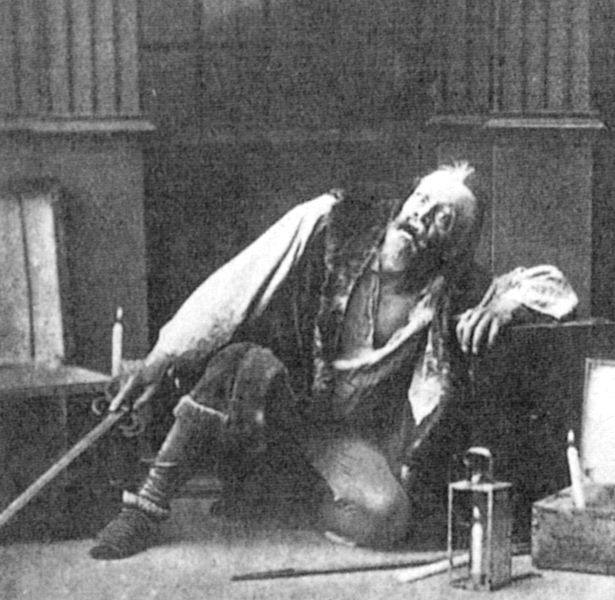
Sad Knight is sad.

Back in college I participated in a study abroad program with the Oxford School of Drama*. One of the acting professors for the program was a grumpy Transylvanian  man named Robert Fried (pronounced fhreed with a slight roll to the 'r'). One of Mr. Fried's favorite utterances, other than various epithets about "penetrating your mother" was, "Vhat is your preparation?" See, Mr. Fried was an adherant of the Stanislavski system of acting, which involves channeling one's own past experiences (read: emotional baggage) into a scene in order to trigger a more "realistic" performance. Now, while this technique represents many of the things I loathe about acTOR culture (narcissism, name dropping/mentor worship, over-psychoanalyzing), learning to develop "triggers" that can inform character choices and drive scenes is a very useful skill for actors, authors and GMs alike.

Early this week, I sat down with a fellow GM for a nerdstorming session to help me plan for my Thursday night game. As we were throwing around ideas for an upcoming encounter, my friend asked, "What is the ideal outcome for this character in this situation?" A light bulb went on, the floodgates opened and mental block walls came crashing down. That one simple sentence "What is the ideal outcome?" was the trigger for which I had been searching.

When I thought about it, it made a tremendous amount of sense. Whenever I find myself faced with a problem, challenge and or conflict, I always have a desired result in mind:

  • My mom will let me have ice cream for dinner
  • The prisoner will come along quietly
  • I'll kill the boar with the first thrust of my spear and the village will have snacks!
If something threatens to derail that ideal, I will drive over around or through the obstacle to try and reach it.


A character's ideal outcome helps inform the tactics he or she will use when faced with a conflict. A lawman who wants to bring a prisoner to justice will likely use different tactics from a bounty hunter whose ideal outcome is getting the reward. Of course, the actual outcome rarely follows the envisioned ideal. The ideal runs face first into obstacles like the environment, lack of resources, and/or the differing ideals of others. Those differences are what generate the conflict and excitement in a scene.

After the nerdstorming discussion, I decided to add a summary of each NPC's ideal outcome into the notes for each encounter I was planning. While preparing for the game, I found this helped me plan for more inherently exciting encounters and to create excitement out of things other than "OGRES! you all draw weapons!" During the actual game, as I played the parts of these NPCs, I kept that ideal firmly in my mind and directed their actions accordingly. Using the ideal as a guidepost helped me feel more comfortable with less preparation and, I felt resulted in some NPC encounters with more nuance and life to them.

Now, "what is the ideal outcome?" might not work as a trigger for everyone. Some people may prefer building their character interactions around props, physical mannerisms, voices or even catch phrases. I have tried all of these with varying degrees of success. Whatever your trigger, I find that having a clear, simple guide point on which you can hang your character helps tremendously in preparing more exciting scenes and then putting them into play.

* It sounds way more prestigious than it actually is as the school is not directly affiliated with any of the Oxford colleges, but is located in Oxfordshire.

Friday, June 17, 2011

Changing the Leopard's Spots: Reskinning in D&D

I'm gonna sing the doom song!

The terms, "skinning" and "reskinning" get thrown around a lot in 4th Edition D&D blogs, forums, literature and other forms of communication. the terms refer to changing the description (a.k.a. the fluff) of a game element -most frequently a monster or spell- while retaining the underlying game mechanics (a.k.a. the crunch). The discourse in 4th Edition encourages DM's to use reskinning to quickly adapt a particular game element to fit another situation (e.g. using the statistics of an orc to represent a particularly dim but burly street thug.) sometimes even encouraging the practice to bend genres (e.g. reskinning a beholder from D&D into a sentient and malevolent spy droid in Gamma World.)


Now, my game of choice is an earlier edition of D&D (3.5) but I have nonetheless become incredibly enamored of reskinning and ideas about the subject have been ping-ponging around in my head lately. Earlier this week, I was particularly inspired by the Chatty DM's account of his game at the Grand Roludothon, which featured a masterfully skinned character named Elan the Eladrin mage.


Chatty's account of Elan at the game table highlights one of many potential benefits to skinning: It can help push the players out of a passive, hack and slash mindset. It allows both player and GM to customize things like spells and special moves to better fit a character or situation. Casting a simple spell in combat can suddenly become a launching point for deeper roleplay. A fireball could be just a fireball, but if the caster launches it by spitting out a swig of dwarven rot-gut and then flicking a match, it becomes something to talk about. (I smell an intervention!)


I have not had a whole lot of opportunity to incorporate skinning techniques into my game as of yet. So far, I have mostly used it to develop unique magic items, such as the recently acquired, "Gentleman's Defense" -a magic parasol that functions as a rapier when closed, or as a small shield while open. In this example, I simply took the stats for a rapier and shield from the equipment lists in the player's handbook, and the stats used depend on how the parasol is being used.


However! Though I have not implemented a major reskin for a character in my game just yet, I did come up with a pretty kickass idea for a bard based on an archetypal heavy metal singer. Here's the fluff:


Stephen Rawking, Bard
Description: 
Stephen originally hails from one of the barbarian tribes in the frozen north. Though he has migrated into the civilized "warmlands" (as his tribe calls them) he has retained many of the traditional modes of dress from his homeland. He wears his hair loose and long, seldom bothering to comb it. He dresses primarily in hardened animal skins with, fur boots and accents. Like the warrior skalds of his tribe, Stephen is expected to fight, and so blades have been affixed to his guitar to double as an axe should he find himself in combat. The magic guitar is further empowered with electrical magic, which can deliver a shock to any it strikes.


Bardic Music:
(Here's where things get fun! I will begin with the official summary of each power and then add my own flavor)
Countersong (Su): A bard with 3 or more ranks in a Perform skill can use his music or poetics to counter magical effects that depend on sound (but not spells that simply have verbal components). Stephen let's out a sustained wail from his electric guitar, drowning out sonic magic within the area.


Fascinate (Sp): A bard with 3 or more ranks in a Perform skill can use his music or poetics to cause one or more creatures to become fascinated with him. Stephen launches into a complex scale progression, which grows in speed, complexity and intensity as he continues to play, all affected stop and watch, wondering "how does he DO that!?"


Inspire Courage (Su): A bard with 3 or more ranks in a Perform skill can use song or poetics to inspire courage in his allies (including himself), bolstering them against fear and improving their combat abilities. Launching into a driving chord progression broken by well-timed key changes, Stephen stirs the blood of his allies with a battle-hymn call to arms.


Spells: (I'll just do one example from each spell level)
Level 0
Summon Instrument: This spell summons one handheld musical instrument of your choice. Stephen hold his hand dramatically out to the side, and suddenly a portal to the 9 Hells opens and an imp in a black t-shirt steps through, placing a fresh guitar in stephens hand before disappearing back from whence he came.
Level 1
Charm Person: This charm makes a humanoid creature regard you as its trusted friend and ally (treat the target’s attitude as friendly). Stephen flashes a smile, speaking in his handsome northern brogue, he invites the spell's target to join him for an after-party later that day.
Level 2
Glitterdust: A cloud of golden particles covers everyone and everything in the area, causing creatures to become blinded and visibly outlining invisible things for the duration of the spell. Rawking lets out a sustained high note and stomps his foot, two bursts of sparkling dust erupt from the ground with a sudden flash covering all within the area.
Level 3
Confusion: This spell causes the targets to become confused, making them unable to independently determine what they will do. Caught up in Stephen's music, the targets of this spell begin to flail about in a chaotic revelry of rawk (mosh pit!) roll to determine their action each round.


d%     Behavior
01–10 Attack caster with melee or ranged weapons. (The creature becomes overzealous and lunges at Stephen)
11–20 Act normally.
21–50 Do nothing but babble incoherently. (The creature cheers, whistles or attempts to sing along)
51–70 Flee away from caster at top possible speed.
71–100 Attack nearest creature (Mosh pit!!!).

I think the example of Stephen Rawking does an excellent job of illustrating the ability of custom flavor text to make a character unique and memorable without requiring a whole custom rule set. I hope to start incorporating more of these specific types of description into my game in the future, and if any of my players are reading this: there might be some bonus xp if you come up with something similar for your character!