Showing posts with label preparation. Show all posts

Wednesday, January 27, 2016

New Campaign - New DM System

Introducing the toddler to the joys of dice.


Last November I started up a new D&D campaign with an almost entirely new group after the old familiar cocktail of schedule conflicts, long drive distances, and unresponded emails caused my previous game to unravel. The new group is smaller (just four players), and includes my wife, and three friends I made through grad school. Though I really loved my previous long-running group, it's really neat to explore a new dynamic with new players.

Our November session was also the first time that I played with a fully armed and operational toddler station running around our house. What's more, our particular toddler is incredibly fascinated by anything and everything electronic... and remember how he's fully armed? well those arms can now reach the top of the dining room table where we play. As such, I had to adjust my DMing a bit on the fly during the last game by putting away the Surface tablet mid session and switching to scratch paper and note cards.

Over the holiday break, I did some thinking about how to adjust my DM toolkit to better deter toddler interference. I'm currently prepping for our second session happening this weekend, and thought now would be a good time to share some of the adjustments I made.

The short of it is that I am switching to a digital/analog hybrid.

I am keeping Microsoft OneNote as my main record-keeping system. I contemplated switching back to an old-school quad-rule notebook, but I just like OneNote's search and reorganizational capabilities too much. However, I am ditching the Surface as a game table interface. The kid was just too drawn to it, and besides, we still have our 1st gen RT. It's upgraded 8.1 operating system takes up nearly the entire hard drive, though I shifted pretty much the entire file storage system onto a sim card, It still gets really bogged down the longer its on and becomes nigh unusable really fast.

Instead, I plan to shift to printed copies of my OneNote pages at the table. This worked really well for me during a one-off I ran for some of my previous players last summer. It just means that I need to remember to print the sheets.

In addition to the printed OneNote pages for encounters, I am going to try out 3x5 cards for my NPCs, and I did pick up a quad rule Moleskine for rough planning notes and adventure mapping.

I suspect the biggest change the notecards and printed pages will have on my style is to force me toward brevity... and therefore wit, right?

Friday, September 13, 2013

Pinteresting Locations


I am a busy dude, and as I have become more experienced at running my regular D&D game, I have found myself trimming the fat from my prep time whenever possible. One of the best tricks that I have added to my DM toolbox deals with creating locations. In the past, I would spend hours, if not days or weeks painstakingly dreaming up and then drawing out the maps for location-based encounters. I would agonize over whether the dimensions for different vertical levels in a structure lined up properly, or whether there were enough fields around a city to maintain its population. I really didn't have time for that kind of crap, and my players didn't really pay attention to it. They wanted cool places to get into fights, and that's it.

Then I realized, why spend all that time fighting writer's block to dream up totally unique places, when you can draw inspiration from the fantastic places already out there!? I set up a Pinterest board called Gamespiration, and over the months that I've had it, the board has filled up largely with photos and illustrations of fantastic locations. The pictures are great for breaking through creative blocks that might otherwise result in yet another fight in an 8x8 room with a couple pillars.

Let me give you an example of how I pulled several existing images together to inspire the location where the final climactic episode of my last campaign took place.

First, I knew I wanted the battle to take place outside a ruined city on a plateau up against a glacier, out of which were running rivers of blighted water. But drawing a city map can take FOR-EV-ER. So I looked around until I found Ani.


I kept the basic shape, changed the fortifications at the north edge to the foot of the glacier and converted some of the landmarks into sites appropriate for my particular ruin.

I also knew I wanted a Helm's Deep style fortress set into the foot of the glacier, so I grabbed this image and a couple others for visual inspiration.


I also grabbed this one for a top-down map.


I ignored the underground cutaway on the bottom of the map, replaced the steps and altar at the top with a keep, and added a few more breaches in the walls from time and previous battles. All-in-all the modifications were much quicker than dreaming it up from scratch.

When my players headed to the ruined city to scout things out, they went poking around in some ice caves looking for a back entrance to the mines they thought might be the source of the evil blight. I took my inspiration for the cave environment from this image.


The beautiful thing about using Pinterest to inspire location is that you can draw from rich visual resources, which can add depth to your locations' descriptions, or even just be shown at the table. "You enter an icy cave that looks like this."

You also can be laying the foundation for incredible locations outside of your prep time without disrupting your usual activities. Anytime you see a cool or potentially inspiring image on Facebook, in an article you're reading or anywhere else online, you can just use the Pinterest plugin in your web browser to toss the image onto your board. When it comes to prepping a location, you then have a one stop shop to get things rolling!


Wednesday, August 28, 2013

New Campaign Kick-off

From CopyPaperRepost

Mustering the Players

We had our first meeting for the new D&D campaign on Monday to talk about things like character progression, adventure plans and to do some shopping with the party's well-deserved spoils of war.

All of my players are back for the new adventure, and most are playing the same characters. The two whose characters were killed in the final battle of the last campaign decided to change things up a bit. Both elected to have their characters raised from the dead, which is a totally reasonable request what with them having just saved the sub-continent, if not the world.

The cleric's body was spirited out of the country by the members of her order before she was brought back. As her player put it, "she came back wrong." I should clarify that she didn't swing towards evil, though she did become more chaotic. She's also got a pretty big chip on her shoulder and looks to be shifting from upstanding tow-er of the church line to somewhat of a loose cannon. Maybe I should brush up on my "turn in your holy symbol and mace!" speech... "YOU'RE OFF THE CASE!"

...ahem

Like this, but with more fur, claws and teeth.
Speaking of cop analogies, after being resurrected, the paladin pulled a Roger Murtaugh, declaring that she was "getting too old for this sh*t". I believe her decision was to retire to start a shrine to her nature deity in the valley where the PC's keep is located.

Her player decided to roll up an entirely new character, which is a bard/shadowdancer/were-bear. If you are familiar with the show Firefly, River Tam is very similar to a shadowdancer. They are incredibly graceful and deadly, and at higher levels can jump between shadows, so to envision this character, picture a dancing bear, who jumps between shadows while throwing knives at you.

I should just end the post here.

but I wont.

Monday, August 26, 2013

Make-it Monday: Player Survey

Here we go again on our owwwwn! *bwahm bwahm* Goin' down the only road I've ever knowwwwn!

Tonight is the first meeting of my D&D group ahead of the new campaign. While the evening is going to be taken up with character creation/leveling and general discussion about the road forward, I hope to be back to the actual dice rolling sometime after Labor Day.

Do you like George Wendt?
I also hope to approach this next campaign in a more systematic way than I began the last one. Several years of play have helped fill my DM toolkit, and I look forward to running a more focused and coherent adventure with a little less... sprawl. As part of that, I want to make sure this upcoming campaign gives my players plenty of what they crave (like electrolytes). In order to facilitate that sweet, smooth satisfaction, I whipped up a pre-campaign survey for this week's Make-it project.


The survey is just two pages to assess each player's preferences when it comes to play style, and things they look for in a game. Player surveys are nothing new to the world of tabletop RPGs. The version I created for my specific group, however is slightly different from many of the examples I found because my players have already been rolling around in my world for years. As such, I wrote some of the questions specifically to focus on the transition, rather than starting from scratch.

However! If you are interested in using a player survey for your game, I also created a more generic version that you can either download and/or borrow from to make your own players fill out a bunch of paperwork for your own personal amusement.

Get the survey here.


Wednesday, July 3, 2013

Upon the Eve of Battle

This is what I'm aiming for.
This is it. The day before the (hopefully) grand finale session of my current D&D campaign. We decided to change things up from our usual short evening sessions and take advantage of the Fourth of July holiday to run a longer daytime game.

If planning is any indication, this last session is shaping up to be pretty epic. I'll be running my first ever battlefield adventure using the "think big, play small" rules described in Heroes of Battle. I've run large scale combats in my game before, but it usually involves my players and a limited number of allies against large collections of enemies. This is the first time where the battle will become more setting than action, and the dynamism implied in a spiky, armor clad dungeon of humanity and carnage has me a bit anxious. There are so many moving parts, I fear that they could just as easily go flying off into oblivion as lock up entirely in a giant, stagnant brick.

This game has been going since February of 2009! That's four and a half years! Seven players, lots of adventures, but one adventure arc! I bit off more than I anticipated when dreaming up the story for this campaign, and I'm honestly amazed that it has held together as well as this. But tomorrow I will need to earn the ending. It needs to be exciting and epic. A deserving climax to almost half a decade and 10 levels of play. For most sessions, I plan for the best, but if they fall flat, it's okay. Not this time. This time has to go well. It has to be exciting, and challenging, and memorable because there is no next time for this particular story.

Now, don't get me wrong, I have discussed the "what's next" with my players and most of them would like to continue with their characters in this world, tying up loose ends, moving on to bigger and better adventures. But the battle against the blight that has torn the Kingdom of Cydon asunder ends tomorrow. It needs to end well.

My brain is full of one of my favorite descriptions of the eve of battle. The calm before the storm. I leave you with the words of the Chorus from Shakespeare's Henry V IV i.

Tuesday, September 20, 2011

Anticip...PATion!

I sense... a TPK

Running a successful tabletop RPG involves quite a bit of future-telling. When I prepare to hunker down behind the screen, I often find myself trying (and less often, succeeding) to anticipate how the upcoming game session will play out. There is a fine line every GM must walk between a game that feels like a movie about trains and a game that feels like... well... um... what do you guys do next?

I am still refining my methods for achieving the zen-like balance between well-crafted story and player-driven experience, and I occasionally wobble to one side or the other, but I have learned a few tricks to keep things from toppling into the abyss.

1. Know thy players and their PCs: One of the first things I try to do when designing an encounter or longer adventure is to approach the problem from my players' point of view. How will they try to solve this? If it is a fight, the sorceress will likely try to kill things with fire, the wizard will lay down AoE spells to hamper the enemy, the whole party will be hasted ASAP and the monk will charge in with fists flying. If the situation calls for sneaking, the rogue will use her ridiculous move silently, disguise and hide bonuses. If there is an obstinate NPC to win over, the bard will step in.

Understanding how your players operate (standard tactics, abilities, etc.) is a good first step, but can often feel frustrating, especially when trying to devise something that will actually present a challenge. I have come to the realization that it is much easier to run a campaign for low-level characters. Now that my group is around level 10, they have so many tools at their disposal that it is difficult to challenge them. Why slog across country for a week when you could teleport?

2. Know the rules: When designing a session, I find it is very valuable to brush up on the rules that are likely to come into play during each encounter. Clifftop fight? Review bull rush, falling damage and climb checks. Bargaining with the king? brush up on the rules for changing attitude and perhaps some of the softer spells like charm person or zone of truth

3. Personality goes a long way: This may not work for everyone, but I find that if I understand my NPCs' goals, favored tactics and personalities, I often don't need to flesh out the anticipated details of how a scene will play. I used to fear roleplaying encounters, but now find them much easier to prep than site-based events such as dungeon crawls, because all I need are a couple note cards and a willingness to act the part.

4. There are no wrong answers: or right answers for that matter. Last week, this idea really hit home as I watched my players wrestle with how to get into a city with heavily restricted access. They weighed options from disguising themselves as beggars, to a traveling show, to the Wookie subterfuge, to just offering to join the army. Eventually they realized that they have the ability to make themselves invisible, but the discussion around the table became a scene unto itself. This helped me realize that I don't always have to have an ideal solution in mind... which, while refreshing, can make it all the more difficult to anticipate the PC's next move.

Fellow GMs, do you have any tried and true techniques for ensuring strong preparation without railroading?

Separate, random question: How would you adjudicate a spell-caster who used Web to break his or her fall (i.e. blasting a magic safety net below) after falling from a particularly high spot?

Friday, September 16, 2011

The New Shiny


It’s the last day of Speak Out With Your Geek Out and, once again, I missed my midweek post. Oh well…

Okay, this may sound like a bit of a cop-out or catch-all, but I am an “idea geek” I love to learn and try new things! From new foods, to new places to new software, I constantly crave new knowledge. I soak it up! It’s weird though because, despite loving new things, I get really antsy about change. I also tend to become obsessed with particular subjects, which seems counterintuitive. Whether its politics or D&D or gardening or Minecraft or spaceflight, if I get into something, I want to know EVERYTHING about it.

One down side to my constant search for new ideas is that I often flit from one new shiny to the next, leaving the other by the wayside like yesterday’s discarded Popple. This works in tandem with the abovementioned obsessiveness to send my focus ping-ponging around to numerous ideas that fit within my obsession du jour

My love of new things has definitely manifested within my extended obsession with D&D. I have tried numerous game management styles, from a laptop running purpose-made DM software, to custom built Excel spreadheets, Word Docs, One Note, to printouts, hand-written notebooks, aaand notecards. I have invented and discarded house rules, character templates and uncountable planning and time management techniques. I often worry that my players feel overwhelmed just trying to keep up with the “so, I had an idea”s.

That being said, occasionally my dalliances with new things bear lasting fruit. Just last night, I tried an experiment inspired by TheSheDM over at NewbieDM.com. My players ran across a slave-toting ogre panning for blighted blood rock along a river. Rather than plan out the map ahead of time, I decided to let the players draw what they saw. As they approached the river, I announced that they saw a river approximately 40’ wide with a bridge running across it, and let them draw the rest. The resulting battle map featured more tactical potential than anything my overworked mind would have come up with during my prep time. There were rocky stepping stones paralleling the bridge (with a mermaid drawn on one.) there were trees to provide concealment, a waterfall and a “zip line” which I converted to a rope that the ogre’s slaves used to keep from going over the falls as they panned.

During the course of the encounter, most of these features were not put to use, but having that potential made the fight feel more alive-at least to me. While I didn’t receive specific feedback from my players, they seemed to enjoy the experience and I suspect I will use the technique again. Hopefully this is one new shiny that will retain its luster for quite awhile.

Friday, August 26, 2011

Off nights

Last night was game night, and I just felt off. As someone who has occasionally been active in theatrical performance, I recognize that this happens to everyone. During the course of a show, there will inevitably be a night where things just seem to go wrong. Your energy is low, maybe you forget a line or two, or are late on an entrance, or maybe the audience is just not as responsive as you have come to expect, but regardless, you feel like you failed to deliver. Thoughts of, "have I lost my edge?" "do I suck at this?" inevitably start to creep into your head like a mindflayer's malevolent suggestions.

In a lot of ways, a GM is like an actor delivering a show to an audience, with the unique twist that the audience participates in return. And so, a GM can similarly have off nights. They should be expected. They will happen. Nevertheless, when they do happen, you feel just as awful. That was me last night.

Last night's game began with a bar fight. It should've been exciting. It's something I have wanted to run for a long time, but I felt like I just didn't click into it. My notes were a mess, I spent a lot of time looking up rules and even more trying to find the right sheet in a disorganized stack of books. This threw off the rhythm, drained the energy and slowed down what should have been a fast-paced, exciting scene. The problem didn't come about for lack of preparation. I had my notes and quick stat cards. I had thought things through. I think the real problem was a lack of calm.

Let me explain. By calm, I mean that quiet time before the game begins. This is the time in which I get into my GM mindset, organize my space behind the screen and focus on the task ahead. Last night, I got tied up for an extra half hour at work, so by the time I got home, my players were about to arrive. The group had decided we would fend for ourselves for food, so I had to order pizza for the GF and me. The laundry I had laid flat to dry on the dining room table was still in place, along with the detritus of several days, which needed to be moved to make room for the battle mat. I had also just received a package containing a new dungeon tile set that I REALLY wanted to use that night, so I had to punch out those cards. Oh, and despite having taken good notes, I hadn't printed them out. All this led me to feel rushed and my focus scattered when 7pm rolled around and it was past time to start the game... and I think it showed.

My takeaway from all this is summed in a mantra repeated ad nauseum by my high school theater teacher: "Leave your day at the door." Last night really made me realize just how important it is to have time before running a game to take a deep breath and just clear out all the mental clutter that life brings.

Next time, I will try to remember that so that I will hopefully be less concerned about starting "on time" and more concerned about starting at the "right time."

Friday, July 22, 2011

What is Your Preparation?

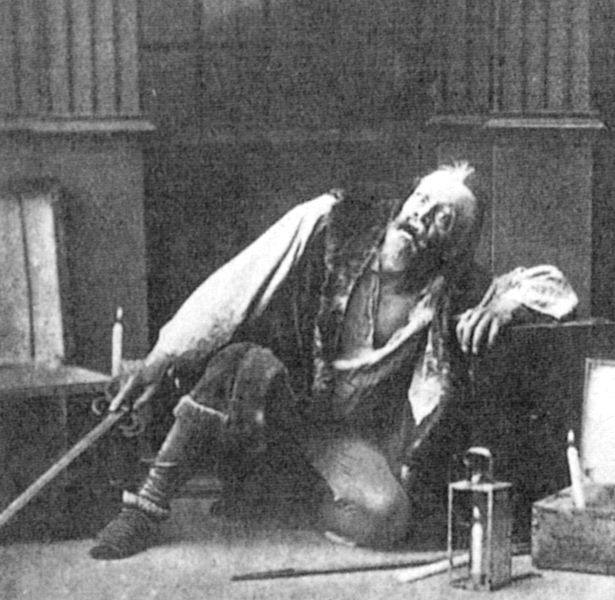
Sad Knight is sad.

Back in college I participated in a study abroad program with the Oxford School of Drama*. One of the acting professors for the program was a grumpy Transylvanian  man named Robert Fried (pronounced fhreed with a slight roll to the 'r'). One of Mr. Fried's favorite utterances, other than various epithets about "penetrating your mother" was, "Vhat is your preparation?" See, Mr. Fried was an adherant of the Stanislavski system of acting, which involves channeling one's own past experiences (read: emotional baggage) into a scene in order to trigger a more "realistic" performance. Now, while this technique represents many of the things I loathe about acTOR culture (narcissism, name dropping/mentor worship, over-psychoanalyzing), learning to develop "triggers" that can inform character choices and drive scenes is a very useful skill for actors, authors and GMs alike.

Early this week, I sat down with a fellow GM for a nerdstorming session to help me plan for my Thursday night game. As we were throwing around ideas for an upcoming encounter, my friend asked, "What is the ideal outcome for this character in this situation?" A light bulb went on, the floodgates opened and mental block walls came crashing down. That one simple sentence "What is the ideal outcome?" was the trigger for which I had been searching.

When I thought about it, it made a tremendous amount of sense. Whenever I find myself faced with a problem, challenge and or conflict, I always have a desired result in mind:

  • My mom will let me have ice cream for dinner
  • The prisoner will come along quietly
  • I'll kill the boar with the first thrust of my spear and the village will have snacks!
If something threatens to derail that ideal, I will drive over around or through the obstacle to try and reach it.


A character's ideal outcome helps inform the tactics he or she will use when faced with a conflict. A lawman who wants to bring a prisoner to justice will likely use different tactics from a bounty hunter whose ideal outcome is getting the reward. Of course, the actual outcome rarely follows the envisioned ideal. The ideal runs face first into obstacles like the environment, lack of resources, and/or the differing ideals of others. Those differences are what generate the conflict and excitement in a scene.

After the nerdstorming discussion, I decided to add a summary of each NPC's ideal outcome into the notes for each encounter I was planning. While preparing for the game, I found this helped me plan for more inherently exciting encounters and to create excitement out of things other than "OGRES! you all draw weapons!" During the actual game, as I played the parts of these NPCs, I kept that ideal firmly in my mind and directed their actions accordingly. Using the ideal as a guidepost helped me feel more comfortable with less preparation and, I felt resulted in some NPC encounters with more nuance and life to them.

Now, "what is the ideal outcome?" might not work as a trigger for everyone. Some people may prefer building their character interactions around props, physical mannerisms, voices or even catch phrases. I have tried all of these with varying degrees of success. Whatever your trigger, I find that having a clear, simple guide point on which you can hang your character helps tremendously in preparing more exciting scenes and then putting them into play.

* It sounds way more prestigious than it actually is as the school is not directly affiliated with any of the Oxford colleges, but is located in Oxfordshire.