Showing posts with label npcs. Show all posts

Monday, January 7, 2013

Make-it Monday: NPC Cards


This is the first post of my 2013 goal to make a thing a week. This week, I would like to share my template for NPC cards with you. The card template is a Word doc with fields for inputting abbreviated stats for D&D 3.5 edition monsters or NPCs. Once filled out, the card is designed to be printed on a 4 x 6 index card for use at the table.

The blank form

A completed example
(This was taken from the version I was using before I made the form)

The quickest way to fill out the card is to make sure "restrict editing" is active and set to fill in forms. Then simply tab through the card filling in the necessary stats as you go. If you want to further customize the form, simply turn of the document protection and adjust as necessary.

This card is really intended for NPCs who will likely face combat, thus necessitating a stat block. It seemed silly to make a card template for a non-combat NPC, as that would likely just be a blank notecard. If you want to add fluff to this card, you can use the note section, or jot down personality traits or draw a character portrait on the back.

If you think these cards might be helpful for your game, you can download the blank template here.

NPC Cards and a set of Gamemastery Face cards make a GM's job much easier


Wednesday, April 4, 2012

D is for Diplomancy

Victoria Maderna Illustrates the problem quite nicely.
Any game that reaches a certain level of complexity winds up with some rules that work really well, and likely a few that don’t quite square up. For 3rd and 3.5 edition D&D, the rules surrounding social interaction skills (Diplomacy, Bluff and Intimidate) fall squarely into the category of game mechanics that need a good fixin’.

The first place where these rules chafe is at the point where rolling dice rubs up against roleplaying. Skill checks are simply dice rolls made to determine the outcome of some task. While such checks make good sense for things like scaling a sheer cliff, escaping from restraints or crafting a magic horn of tootie-fruity--actions that would be ridiculous, dangerous and/or impossible to replicate in the comfort of one’s living room--they might not be so necessary to replicate things like, bartering with a shopkeeper, or interrogating a prisoner. These are in-game activities that can be reasonably approximated with talking and a bit of imagination. No furniture broken.

However, not every player excels at thinking on his or her feet, and if you’ve ever met my fiancee, you’d know that any attempt she made to actually intimidate someone would likely be met by giggles and/or hugs. Having the option to roll dice makes an excellent choice for players who are playing outside their normal personality, or who are friggin’ tired from a day of work.

The second place where the social skill rules tend to chafe is in the way their bonuses are calculated. In 3rd edition D&D, every skill is tied to a particular character statistic. All the social skills happen to be tied to Charisma (i.e. how attractive? persuasive? leadership quality-ish? a character is.) Unfortunately, by this metric, a hulking 7-foot tall half orc (with a -2 racial penalty to charisma) is statistically likely to be less intimidating than a 3-foot tall halfling (no cha penalty). How does that work!? 


The rules also fail to account for cultural differences that might arise, like barbarian mistrust of candy-ass bards and their pretty-talk. Thus, it is up to the GM to house-rule and/or shoehorn exceptions to these rules. While this might work for many groups, it might also lead to GM v. Rules-Lawyer in a court of nerd. In my particular house, I will allow players to use an alternate stat modifier on social checks if they tell me how they plan to use it. “I’ll get him to talk by throwing my dagger into his chair two inches below the family jewels” = intimidate + dexterity check.

There is also the issue of how the rules actually play out. The game uses a roll of the dice against a fixed number found on this table to determine how far another character’s attitude is shifted by a check. It is quite possible for a player to acquire enough ranks in their social skills to diffuse even the most rabid animosity and to turn every shop-keep into the player’s new best friend. Furthermore, anyone with even a single point bonus to any of these skills will almost never provoke a negative reaction from someone they try to woo. This fixed target mechanic often leads bards and other social-powerhouse characters to be disparagingly called “diplomancers”. Again, house rules and shoehorns can be employed to fix the issue. Say my character misses with his dagger... the interrogated’s attitude could change in several different negative ways depending on where the knife ended up.

Finally, there is a problem of degree. Some players have the distinct impression that a higher roll automatically equals a better result. While this is true in some cases, in others, the results max out after a certain point. You rolled a 34 while chatting up the previously indifferent barman? Great! He likes you a lot. You are his new best friend. Does that mean he is going to give free drinks to you and everyone else you bring to his bar for life? Not. Bloody. Likely. GMs need to establish, and may need to explain the limits to which a character will go for their new diplomantic BFF.


Meatloaf is so diplomantic, but even he has his limits.

I have not yet found a solid solution to the diplomancy issue. My games typically involve a mix of roleplay used to favorably influence the later dice checks. This works fairly well for the most part, but the problem of overpowered diplomancers still rears its pretty head from time to time.

Tuesday, April 3, 2012

C is for Companions


This is the first post in the final of three threads which will intertwine through my April A to Z effort. In addition to “Building abetter Hero” and “Building a better Villain”, I will offer a series of posts on character interactions. This first post is all about effective use of non-player character (NPC) companions.


Throughout the course of their adventures the heroes of a tabletop campaign will encounter numerous individuals, from townsfolk to royalty, to reclusive sages. Many of these figures will come and go over the course of a single game session or even a single encounter. However, on occasion, a GM may find it necessary and/or desirable to have an NPC or group of NPCs travel along with the heroes. Ideally, companion characters should enrich and support the story and the players’ role as protagonists without stealing the spotlight or otherwise getting in the way.

Running companions well is a bit of a tightrope act. Ideally, they should be more than simply walking stat blocks; they should seem like people. This means the GM must craft and role play each companion’s own unique personality. When you take into account that the GM must also play the roles of any monster, villain or village bar wench the party comes across, adding even one more personality to the pile can be a challenge. If the heroes have assembled a whole posse--eg. the squad of holy crusaders my players are currently traveling with--making sure these characters come across as people becomes an even more formidable task.

So, why is it important for companion characters to have personality? Why not just be content with Bob Spearman #1? First, if you play companions like they’re unique individuals, the party is more likely to treat them as such. This can help you avoid the problematic situation in which your heroes, the PCs send their companions to do all their dirty work for them—a situation, which threatens to spiral into the GM acting out an NPC vs. NPC play while all the players watch and eat Cheetos. 

“We’re just about to the Dragon’s lair, send in archers 1 and 3 to see if its awake.” 

If their companions are just stat blocks, the players will justify "sending in the help" as erring on the side of caution. If the companions have personalities, the players will be more likely to see it as risking the well-being of, well, a trusted companion.

Of course, the sheer number of characters a GM has to create and remember over the course of a game can make the task of crafting and assigning unique personalities rather cumbersome. I have a couple tricks I use to help ease the burden.

Step 1: Forget originality. It is perfectly okay to rip your NPCs’ personalities and even names from movies, comics, or any other place you find them. I once had a GM populate an entire medieval bandit village with the alter egos of DC superheroes! Unless you are completely ham-fisted about it, the uniqueness of your game world should be enough to make these personalities seem new. For the holy crusaders currently accompanying my players, I simply assigned various archetypes commonly found in action-movie teams. There’s the Sarge-style leader; the rookie; the wise preacher; the smartass; the big burly guy; the quiet, businesslike one; and the twitchy one with a chip on his shoulder. There, you have seven companions with seven very distinct personalities that only require me to remember a sentence or even a word to play effectively.

Step 2: Worry about unique personalities over unique stat blocks. Reuse old stat blocks for guards, cult members or barkeeps if you stat them at all. The crusaders in my game use two stat blocks. One for the healy clerics and one for the fighty paladins. Each of those sub-types has a leader. To make the leaders seem a bit more badass, I’ll simply fudge their stats by adding 2 to the existing stat blocks. Done! No muss, no fuss. Remember, only you the GM, sees your stat blocks. As long as things feel believable to the players, they likely won’t care where the numbers came from. (at least this is true in my group)

Combining memorable personalities with efficient character generation can turn companion characters into one of the most powerful tools in a GM’s toolkit. Want to establish a pants-wetting sense of danger before a big fight? Have the giant that the PCs are about to face tear the arms off their pal, Bucky and use his corpse as a greatclub. Have the mindflayer threaten to debrain their favorite wandering sage unless they meet its foul demands. Strong companion NPCs make great atmospheric and emotional fodder. The unique personalities that the players have come to love are, above all, a fantastic way to make it mean something when they die a horrible, horrible death.

Wednesday, August 24, 2011

Player Characters, not so cute and cuddly anymore

Killing vampires... not as exciting as it used to be.

Running a long-term D&D campaign feels analogous to raising a St. Bernard, or perhaps a bear cub. When I started my current game, almost three years ago, my players’ characters were level 3 -robust enough to have a chance against a pack of wolves, but still be anxious about a toe-to-toe incident with the town militia or a group of bandits. They were rambunctious and cuddly, like a puppy or bear cub.


Cut to today, my game’s PCs are level 10. In terms of their power level, they are now like young adult bears, able to tear their way into cars and campsites and afraid of very little aside from bigger bears. As a real-world human comparison, they are now similar to a group of Navy SEALs. In short, it’s getting harder and harder to provide a reasonable challenge, especially when it comes to encounters with other in-game characters (as opposed to monsters).


According to the stat blocks laid out in various D&D rulebooks, most civilized organizations, whether they are law enforcement or criminal in nature, wouldn’t stand a chance against my PCs. The average city guard is between level 1 and level 4, essentially similar to a rent-a-cop, and even a watch captain, or head of a theive’s guild has to stretch to meet the PCs’ power level.


I have been wrestling with the challenge of keeping human encounters interesting and challenging for my players, while maintaining a degree of realism to the power dynamics in my world. So far, I have identified a couple of approaches I can take:


  • Boost the power levels of NPC organizations to make them a challenge. While this can keep fights and interactions statistically interesting, it has a number of issues. If the king and his guards are so badass, why don’t they do their own dirty work? Why is an uber-powerful thiefmaster running a smuggling ring in some out of the way backwater?
  • Leave the power levels alone and just pile on the numbers. How many level 1 soldiers does it take to reach a level 10 sorceress hurling fireballs in their face? Would they even try?
  • Avoid human encounters where possible in favor of more powerful and exotic monster antagonists. Why have these super powerful monsters been hiding away until now instead of claiming their dominion over the weaklings of the region?
  • Take the Spider-Man approach -With great power comes great responsibility. On the surface, this sounds like the best option, let the players be Navy SEALs, and face consequences if they open up with fireballs in the middle of a bar fight. Of course, if the authorities are two weak to actually enforce those consequences, this doesn’t really solve the problem.


Any thoughts, tried and true techniques or other advice on the subject from my gaming friends?

Monday, August 22, 2011

RPG Blog Carnival: Animals in RPGs - Catfolk

Ahh, catfolk...


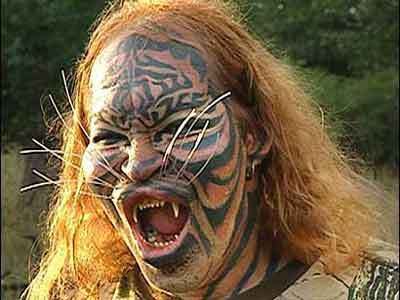
This race of feline-faced humanoids appeals to furries, cosplayers, Red Dwarf fans and occasionally to normal people who like playing dexterous and agile sneakitypes.

As a concept, catfolk have great potential to add an element of comic relief in your game. Many people have cats, and 99.9% of those cats do amusing and or ridiculous things on a fairly regular basis. So, naturally, infusing the haughty-yet-playful personality of the average feline into a human character should equate to comic gold, right? Well, it could also result in something incredibly annoying.

For instance, before the GF and I met, she played in a campaign with two catfolk PCs. Apparently the players made a regular point of allowing their characters to be distracted by bits of string and other shiny objects in the middle of otherwise tense situations. While a catperson who winds up with armfuls of gaudy baubles on a trip through the local bazaar is one thing, when they decide to chase a beholder's eye rays rather than leap on its back with daggers in-hand, the cute personality gets a little annoying. Seriously, kill the beholder first and then let the wizard wave its severed eyestalk around to your heart's content!

Now, I will fully admit that the catfolk in my game can be pretty friggin' obnoxious. After all, I could not resist my love of pop-culture references, and so decided to base their culture on LOLCats. However, I do try to use some restraint when running them as NPCs. I make a concerted effort not to let their antics get in the way of the PCs' glory or the excitement of the adventure. It's all about finding the balance... like a cat.

A couple things to consider that can help an aspiring catperson find the balance in their character include:

I'm gonna eat you little fisheee!
  • A catperson is a more highly evolved feline. They presumably have human-level intelligence, and so, like civilized humans, one would assume they have developed a level of restraint that helps them control their animalistic urges. After all, most people who play human characters don't pick lice of the other party members, obsessively eat bananas and fling their poo. Catfolk are to cats as humans are to apes.
  • Cats are not just ridiculous clowns to amuse you. In fact, to people, they mostly seem that way because they are small. If you ran into a tiger wiggling its butt as it gets ready to pounce, chances are, you would not be thinking, "aww! How adorable!"
  • Cats have incredible survival instincts. Many hunt with a great degree of skill. My family had a cat who used to get in tussles with alligators when we lived in FL. They are agile, stealthy and quick. Even the GF's lazy flabby cat can put on quite a burst of speed when she wants to.
The point is, catfolk have a lot of potential as a character race if they are played honestly and with the intent to contribute to the story rather than detract from it. As one of my former GMs used to say, "don't play chaotic-stupid."

Be sure to check out other posts from this month's RPG Blog Carnival, Animals in RPGs

Wednesday, August 3, 2011

The Devil's Workshop

The old saying goes, "Idle hands do the Devil's work." Well, in an effort to curtail anything untoward during my downtime, I like to engage in ridiculous and random acts of creation, and right now I'd like to share the forbidden fruits of some of my recent labors.

First off, as I mentioned recently, I have been seduced by the siren song of index cards as a game management tool. I have started creating NPC cards for each of the characters my players will encounter in a particular game session. I have started doing this for two reasons:

  1. I have an obscene amount of blank 4x6 index cards that have been sitting in my office unused for untold eons. Where did they come from? Nobody knows! They're like the druids that way.
  2. Creating frivolous things using office software is a past time I enjoy just about as much as D&D, and I don't need to convene a group to do it.
As a first step in my indexing efforts, I created a template, which presents a character's stats in an easily scanned* format and, which can adequately portray most NPCs or monsters. If you want to check out some examples cards completed using the template, you can see them here. I am now gradually converting many of the NPC stat blocks, which I had previously recorded in a myriad of mismatched ways into this single clean and compact format.

The second project I recently launched involves the barbarian dream house I got my players as a Christmas gift. Basically, I gave them an in-game present -a castle, which now serves as their base of operations, and which provides an opportunity for a different type of game experience. As part of the terms of ownership, my players are tasked with maintaining and managing their new base. They have taken to the task with gusto, and have already made numerous improvements. To help keep track of the structural renovations and modification projects they have launched, I decided to create a virtual 3D model of the keep in Google SketchUp... like ya' do.


Along with being a D&D nerd and an office software nerd, I am also a big ol' SketchUp nerd. You have not lived until you've moved into a new home having plotted out all your furniture placements in advance using SketchUp. When the gf and I moved into our current place, we did just that and had almost no fiddling with furniture on moving day. It all just fit. Perfectly.

Anyway, if you haven't heard of it, Google has a very robust free version of the program available for download. That was the version I used for a long time before I managed to finagle a copy of SketchUp Pro in exchange for providing an introductory seminar on the program at my old grad school. Yes, I am that level of leet SketchUp nerd.

Anyway, these are just a couple examples of the sort of trouble I get into when my hands get idle.

mmm... forbidden donut!

* scanned as in the DM frantically hunting for a stat in the midst of a combat encounter, not the thing which puts photos on the 'puter

Friday, July 22, 2011

What is Your Preparation?

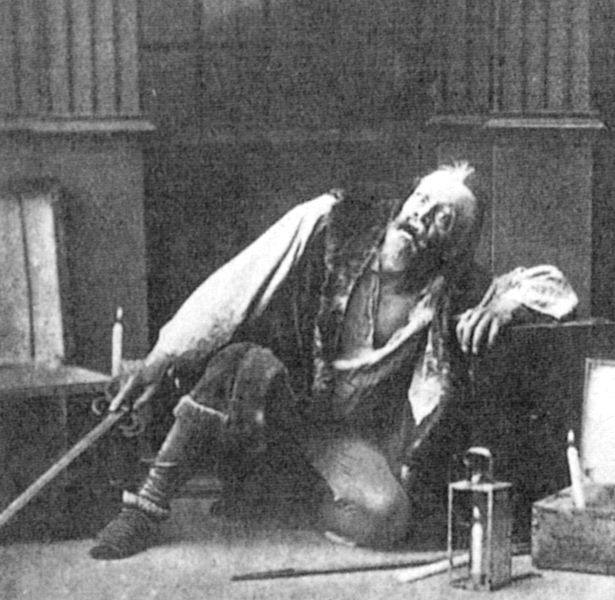
Sad Knight is sad.

Back in college I participated in a study abroad program with the Oxford School of Drama*. One of the acting professors for the program was a grumpy Transylvanian  man named Robert Fried (pronounced fhreed with a slight roll to the 'r'). One of Mr. Fried's favorite utterances, other than various epithets about "penetrating your mother" was, "Vhat is your preparation?" See, Mr. Fried was an adherant of the Stanislavski system of acting, which involves channeling one's own past experiences (read: emotional baggage) into a scene in order to trigger a more "realistic" performance. Now, while this technique represents many of the things I loathe about acTOR culture (narcissism, name dropping/mentor worship, over-psychoanalyzing), learning to develop "triggers" that can inform character choices and drive scenes is a very useful skill for actors, authors and GMs alike.

Early this week, I sat down with a fellow GM for a nerdstorming session to help me plan for my Thursday night game. As we were throwing around ideas for an upcoming encounter, my friend asked, "What is the ideal outcome for this character in this situation?" A light bulb went on, the floodgates opened and mental block walls came crashing down. That one simple sentence "What is the ideal outcome?" was the trigger for which I had been searching.

When I thought about it, it made a tremendous amount of sense. Whenever I find myself faced with a problem, challenge and or conflict, I always have a desired result in mind:

  • My mom will let me have ice cream for dinner
  • The prisoner will come along quietly
  • I'll kill the boar with the first thrust of my spear and the village will have snacks!
If something threatens to derail that ideal, I will drive over around or through the obstacle to try and reach it.


A character's ideal outcome helps inform the tactics he or she will use when faced with a conflict. A lawman who wants to bring a prisoner to justice will likely use different tactics from a bounty hunter whose ideal outcome is getting the reward. Of course, the actual outcome rarely follows the envisioned ideal. The ideal runs face first into obstacles like the environment, lack of resources, and/or the differing ideals of others. Those differences are what generate the conflict and excitement in a scene.

After the nerdstorming discussion, I decided to add a summary of each NPC's ideal outcome into the notes for each encounter I was planning. While preparing for the game, I found this helped me plan for more inherently exciting encounters and to create excitement out of things other than "OGRES! you all draw weapons!" During the actual game, as I played the parts of these NPCs, I kept that ideal firmly in my mind and directed their actions accordingly. Using the ideal as a guidepost helped me feel more comfortable with less preparation and, I felt resulted in some NPC encounters with more nuance and life to them.

Now, "what is the ideal outcome?" might not work as a trigger for everyone. Some people may prefer building their character interactions around props, physical mannerisms, voices or even catch phrases. I have tried all of these with varying degrees of success. Whatever your trigger, I find that having a clear, simple guide point on which you can hang your character helps tremendously in preparing more exciting scenes and then putting them into play.

* It sounds way more prestigious than it actually is as the school is not directly affiliated with any of the Oxford colleges, but is located in Oxfordshire.

Friday, March 4, 2011

Charlie Sheen is an Undead Wizard

I love basing the personalities of my NPCs (Non-Player Characters) and BBEGs (Big Bad End Guys) on characters from movies, books, TV or from actual people in the news. Its a lot easier when drafting an NPC to write down: "Yosemite Sam", or "Samuel L. Jackson" or "Sam Kinnison" (or any other Sam) as a prompt for how to play that character in game than it is to write out a full description of his/her/its mannerisms.

In the wake of the now internetfamous Charlie Sheen interviews, I started thinking about which crazy celebrities would fit well as the personalities for different D&D monsters. I feel like celebrities spend so much time building up a public persona that they end up adopting archetypal characteristics like those found in stories. Then, when they break down or go off the deep end, they often seem to behave like some sort of dastardly arch-villain. They have a motivation, which they believe to be perfectly reasonable, but which appears frightening, crazy or deranged to the rest of us. After all, the most believable villains are those who think they are heroes.


So, with my new crackpot theory in hand, I took to the interwebs and launched a discussion on the boards over at Obsidian Portal. 

Here are some of the ideas I came up with:
  • Charlie Sheen – I think his burned out voice and raving about giving people magic and having tiger blood in his veins would be ideal for a Lich (undead wizard).
  • Oprah – She seems like she would be good as some sort of dragon, acting magnanimous but in a way that adds to her prestige and ultimately benefits her own horde.
  • Sean Penn – An ogre druid who was once in a torrid love affair with a nymph. He loves the planet, but always scowls and if you piss him off, he’ll smash your face.
  • Tom Cruise – Dragon with a captive princess. He is a major player in a bizarre cult and will ruthlessly quash anyone who interferes with their business or reveals their secrets.
And here are some of the ideas others added to the pot.

From Portalier, Libranchylde:
  • Lindsy Lohan - a halfling klepto with a drug problem. She even has the Kender spoon of “Cooking”, given to her by her Uncle Smackslinger.

From Portalier, Poutine_Paladin
  • Paris Hilton - A succubus & wealthy heiress to a huge fortune/kingdom who thinks/acts as if her fame is due to some actual talent/skill, but in actuality...it's only that the commoners want to bed her.
  • Miley Cyrus - The unfortunate result of a bard who was in good with the public for a few months many years back mating with one of the fairy folk. She now uses her fey music to lure children into the woods to their doom. Adults, however are immune to her musical pull.
  • Avril Lavigne - A doppleganger/shapeshifter that takes on whatever persona will achieve her goals according to the whims of the general populous.